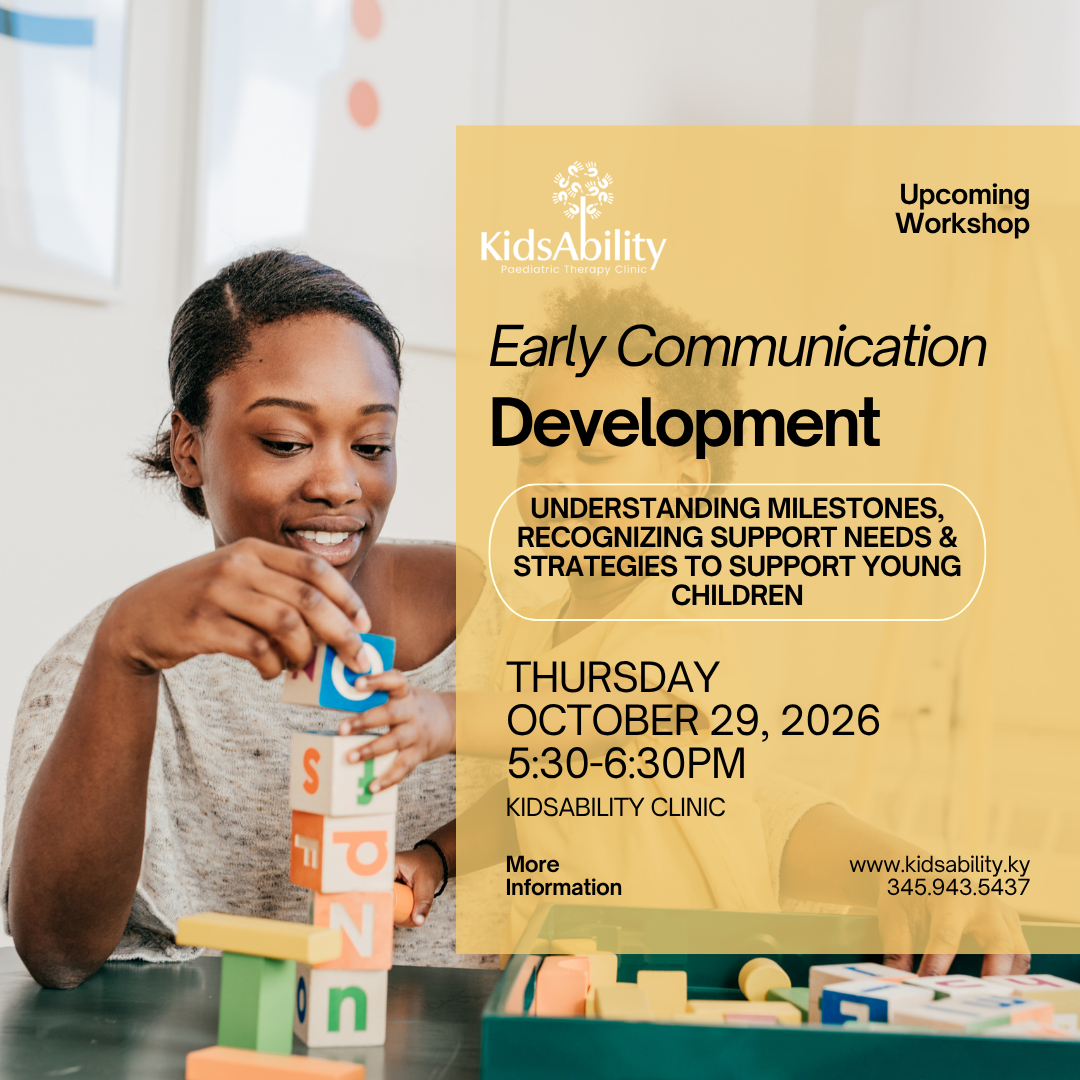
Early Communication Development: Understanding Milestones, Recognizing Support Needs & Strategies to Support Young Children
📅 Thursday, October 29, 2026
🕠 5:30-6:30 PM
📍 KidsAbility Clinic, 8 Midtown Plaza, 273 Elgin Avenue
Presenter: Samantha Martin, Speech Language Therapist, KidsAbility Paediatric Therapy Clinic
Communication begins long before a child says their first word. Children communicate through sounds, facial expressions, gestures, play, social interaction and, eventually, spoken language. Understanding how these skills develop can help parents and professionals recognize a child’s strengths, identify when additional support may be beneficial, and create everyday opportunities for communication and connection.
This presentation will explore communication and language development from birth to five years, including the progression from early sounds, gestures and turn-taking to first words, sentences, conversations and storytelling. Participants will learn how speech, language and communication differ and why communication involves much more than simply talking.
The session will examine developmental milestones across the early years and the signs that may indicate a child would benefit from further assessment or support. Participants will also learn what a Speech Language Pathologist considers when evaluating a child’s communication, including language development, play and interaction, hearing, functional participation, family context and the child’s communication across everyday environments.
Particular attention will be given to multilingual and culturally responsive communication development within the Cayman Islands. The presentation will discuss multilingualism as an asset, the importance of distinguishing a language difference from a language disorder, and the need to consider a child’s home language, dialect and cultural context when assessing communication.
Participants will also be introduced to neurodiversity-affirming approaches to supporting communication, including recognizing different communication styles and prioritizing autonomy, meaningful participation, authentic connection and the individual strengths of each child.
Most importantly, the session will provide practical strategies that parents, caregivers and educators can use during everyday activities such as meals, bath time, dressing, school runs, play and book reading to create natural opportunities for communication and language development.
Learning Objectives
By the end of the presentation, participants will have a better understanding of:
• The differences between speech, language and communication
• Key communication and language milestones from birth to five years
• How communication develops before spoken words emerge
• Receptive, expressive and social communication development
• The role of play in developing language and communication skills
• Developmental patterns and red flags that may indicate a child needs additional support
• The importance of hearing as part of communication and language development
• What a Speech Language Pathologist considers during a comprehensive assessment
• Communication differences that may be associated with autism and other neurodevelopmental differences
• Neurodiversity-affirming approaches to communication support
• Multilingualism, dialect and culturally responsive assessment, with particular consideration of the Cayman Islands
• Practical strategies for building communication and language into everyday routines
The presentation emphasizes that communication development is about more than achieving individual milestones. Patterns across a child’s understanding, expression, interaction, play and participation help guide decisions about when additional support or referral may be appropriate.
Who Should Attend?
This presentation is ideal for parents, caregivers, early childhood educators, teachers, paediatricians, psychologists and allied health professionals, as well as anyone who works with or supports young children.
This educational presentation is sponsored by KidsAbility Paediatric Therapy Clinic. There is no cost to attend, and all attendees will receive a Certificate of Attendance.